Blog
Working With Your Gateway Vendors, Not Against Them
If you run a bank or a telecom, you probably already have Apigee, Kong, or one of many enterprise API management gateways in production. You may even run several gateways, each added for a sensible reason at the time. One handles external partners, another came in with a cloud migration, and a third belongs to a business unit that went its own way.
The market's usual answer is to replace them. Mark O'Neill, VP Analyst at Gartner, has observed that organizations already running API management are now buying even more of it. Meanwhile, AI agents are joining the queue of API consumers, and Deloitte warns that many AI initiatives stall when the integration layer can't keep up.
We see this pressure every day in our client work. In most cases, though, a new gateway isn't the answer. The gateways you already run are rarely the problem. What's usually missing is the layer that gets them working together.
The Gateway Isn't the Bottleneck. The Gaps Around It Are.
Gateways are hard to replace, and for good reason. Each one holds years' worth of business logic and workflows built into the gateways’ policies, proxies, and integrations that your business depends on.
The real friction lives in the space between them. APIs multiply across teams without a shared catalog. Security rules shift from one platform to the next. And nobody can see runtime health across the whole estate at once.
What many organizations want instead, O'Neill notes, is a single control plane that works across gateways from different vendors. The trouble is that few tools on the market deliver it yet.
Tooling is only part of the gap. Banking IT leaders surveyed by McKinsey named governance and business-and-IT collaboration as persistent pain points in their API programs. It's a costly gap to ignore, given that large banks allocate about 14 percent of their IT budgets to APIs.
If the problem sits between your gateways, that's where the fix belongs too.
An Orchestration Layer, Not a Replacement
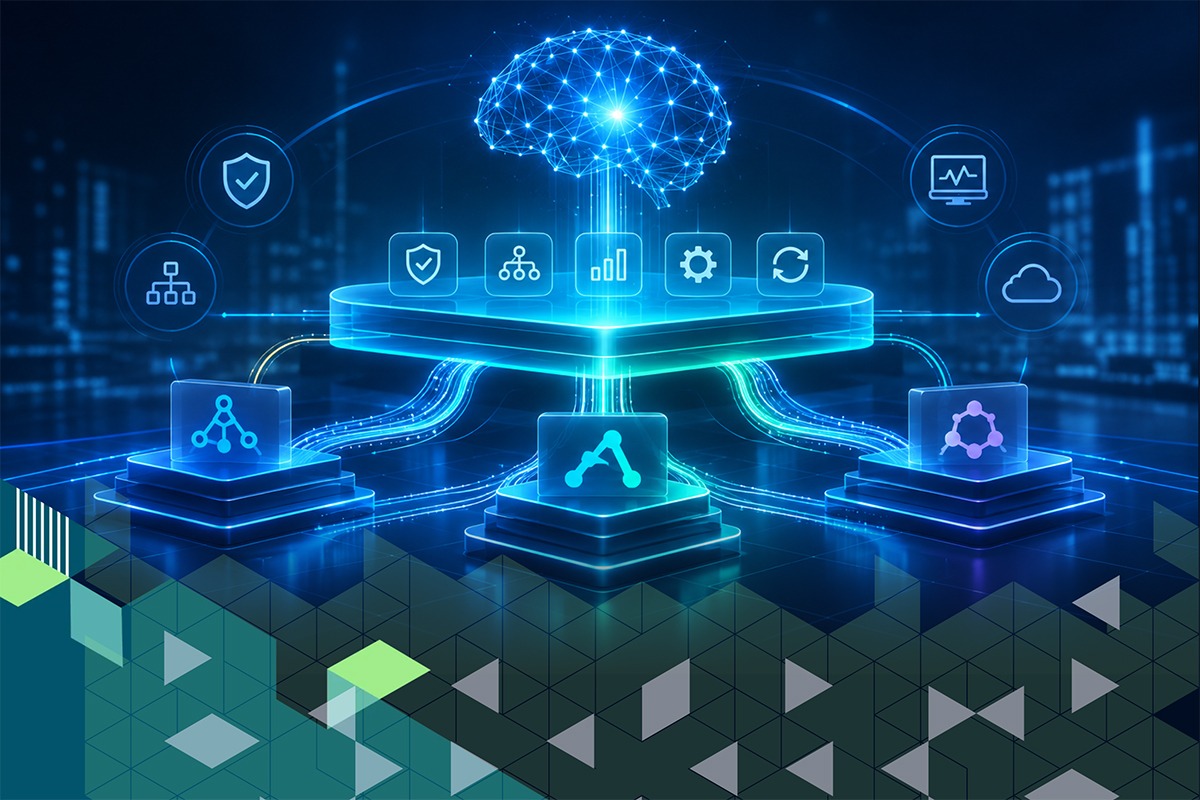
Think of an orchestration layer as a management tier that sits above your gateways. Your gateways still carry the traffic. The layer takes care of what surrounds it: discovery, governance, security, operations, and observability.
IDC outlined a similar idea for cloud estates, in which a single management layer unifies governance and security across platforms. The principle carries over neatly to APIs. You set a single standard for how APIs are designed, secured, and run, and every gateway follows it.
It also puts migration back in its proper place. Moving an API to another platform becomes a decision you make when the numbers support it, not a reflex for every problem.
Of course, whether a partner sees migration as a decision or a default often comes down to how that partner gets paid.
Why We Lead With Engineering
A partner that earns from licenses will naturally lean toward recommending products. There's nothing wrong with that model, but it tends to start from what you could buy next.
We start from different questions: What are your business requirements? How do we get more out of what you already own? How do we build layers and adapters around pre-existing layers to fit enterprise products to your needs beyond standard configurations?
For many banks, that's the more urgent question. PwC describes a modernization paradox in which banks adopt cloud and data tools quickly but lack the engineering discipline to turn them into efficiency. Without structural change, PwC adds, new technology can deepen fragmentation rather than reduce it.
Every replacement also piles onto technical debt. CIOs surveyed by McKinsey estimated that tech debt already equals 20 to 40 percent of the value of their entire technology estate.
That's why we built Engineering-X. We write code, build workarounds, and extend vendor products to do what they weren't designed to do. So, when a gateway lacks a feature you need, we extend it and keep it in place.
Engineering-X also forms the foundation of our MAST framework.
How MAST Wraps the Gateways You Already Run
MAST, short for Managing API Strategy & Transformation, wraps six layers around your existing gateways.
- Discovery & Health is where every engagement begins. We map your API estate, your gateways, and their runtime telemetry, and we assess how ready your APIs are for AI consumption.
- Governance & Design turns that picture into standards. It covers standardized proxy blueprints, AI-ready API design, and a shared catalog and developer portal.
- Security & Compliance applies a consistent set of protections across the board, through static analysis, automated pen-testing, compliance rule enforcement, and PII/PCI scanning.
- Migration & Transition comes into play when you decide to move, with cutover validation, rollback automation, and zero-downtime cutover.
- Operations & Lifecycle brings day-2 work together through a unified ops dashboard, blue/green upgrades, and vendor-agnostic control.
- Observability & Monetization turns telemetry into business decisions, from full-stack observability to cost chargeback and usage-based monetization.
Across all six layers, MAST extends your vendors' gateways rather than competing with them, resulting in fewer escalations for your team. AI readiness runs throughout the framework, from consumption-pattern analysis to AI-enabled security.
We run this model in production today, operating an API infrastructure that handles billions of transactions daily with zero downtime.
The framework stays the same from client to client, but how we apply it depends on how your organization works.
Fit the Estate to Your Organization
In banking, API programs succeed when governance reflects how the business sets priorities. That's becoming harder to put off, with 88 percent of banking IT leaders saying APIs have become more important over the past two years. An orchestration layer lets you define governance once and apply it everywhere.
In telecom, the value sits in network APIs, which McKinsey estimates could unlock $100 billion to $300 billion in connectivity- and edge-related revenue. Capturing that value depends on APIs you can trust, measure, and open up to AI consumers.
Both industries rely on technology for most of their transformation value, up to 71 percent by McKinsey's count. With that much riding on it, your API estate should bend to fit your organization, not the other way around.
Where to Start
These questions can help you spot where the gaps are costing you:
- Is your AI team waiting on API fixes before it can ship?
- Does your API support team spend most of its time raising vendor tickets?
- Are you running dated API management software?
- Do your gateways share one security and governance model?
If any of these sound familiar, the best first step is a clear view of what you already run. Book a Platform Architecture Review, and we'll walk through your priorities together and map out where to move next.
Related Blog

Transformation enabled
While most of the organizations fast track digital transformation, it is essential to consider...

BPA Total Cost of Ownership Video Series
Making sense of the Total Cost of Ownership is a prerequisite for producing above average...

Making Sense of the Total Cost of Ownership – Assessment & Consulting | Development & Deployment
Assessment and consulting costs are the costs of engaging a suitable BPA third-party...